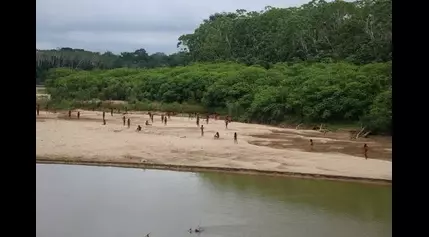
Photos show reclusive tribe on Peru beach searching for food: “A humanitarian disaster in the making”
2025-11-15
49.6K
3.5K
1.1K
Protecting the Mashco Piro: Safeguarding the Amazon's Most Isolated Tribe
An advocacy group for Indigenous peoples has released photographs and video footage that shed light on the plight of the Mashco Piro, a reclusive tribe in the Peruvian Amazon. The images show members of the tribe searching for food on a beach, raising concerns that logging concessions are encroaching on their territory and threatening their way of life.
Uncovering the Struggle of the Mashco Piro: A Cry for Urgent Action
Logging Concessions Threaten the Mashco Piro's Existence
The Mashco Piro, one of the world's most withdrawn Indigenous communities, have been forced to venture out of the rainforest more frequently in search of food, a troubling sign that their territory is being encroached upon by logging operations. Survival International, the advocacy group that released the photographs, has long sought to protect what it considers the largest "uncontacted" tribe in the world.According to the group, several logging companies hold timber concessions within the Mashco Piro's territory, raising fears of conflict between the tribal members and logging workers, as well as the possibility of the tribe being exposed to dangerous diseases. This situation has already led to violent encounters, with two loggers being shot with arrows in 2022, one fatally, in a reported encounter with tribal members.
Alarming Sightings and the Potential for Humanitarian Disaster
The photographs and video footage show a large group of around 53 male Mashco Piro members on the banks of the Las Piedras River, a highly unusual occurrence according to Survival International researcher Teresa Mayo. The group estimates that as many as 100 to 150 tribal members, including women and children, may have been in the area.Cesar Ipenza, a Peruvian lawyer specializing in environmental law, expressed concern over the situation, stating that the large group gathering could be a "situation of alarm" even in the case of legal logging activities. Indigenous people typically mobilize in smaller groups, and the presence of a larger group may indicate a deeper underlying issue.
Governmental Policies and the Erosion of Indigenous Protections
The plight of the Mashco Piro is further exacerbated by recent policy changes in Peru. In 2023, the country loosened restrictions on deforestation, a move that has been criticized by researchers who warn of the rise in deforestation for agriculture and the increased ease of illicit logging and mining.Additionally, a pending bill in Peru would facilitate the export of timber from areas where certain protected species, such as the Dipteryx micrantha, a tropical flowering plant, have been safeguarded. Ipenza noted that these setbacks in forestry and conservation matters, coupled with an alliance between the government and Congress that facilitates the destruction of forests and the Amazon, are deeply concerning.
Urgent Call for Action: Protecting the Mashco Piro and Their Rainforest Home
Survival International has called for immediate action to address the plight of the Mashco Piro, urging the Forest Stewardship Council to revoke its certification of the timber operations of one of the companies, Canales Tahuamanu, operating in the tribe's territory. The advocacy group has also emphasized the need for the Mashco Piro's territory to be properly protected, stating that this is a "humanitarian disaster in the making" that requires the loggers to be removed from the area.The situation of the Mashco Piro is a stark reminder of the ongoing struggle faced by Indigenous communities in the Amazon, as they strive to protect their way of life and the delicate balance of the rainforest ecosystem. The release of these photographs and the call for action by Survival International serve as a powerful plea for the international community to prioritize the rights and well-being of the Mashco Piro and other isolated tribes, and to take immediate steps to safeguard their ancestral lands from the encroachment of extractive industries.