Entertainment
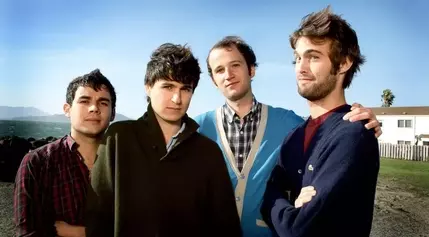
One balmy evening this past summer, I found myself in the bustling courtyard of a bar under the Williamsburg Bridge, celebrating a friend's thirtieth birthday. I was having a decent time chatting with the partygoers until a stranger asked about the new music I had been listening to. The screeching of the trains above came to a halt, and everyone at the party fell silent, looking my way. I struggled to come up with something cool and obscure to share. The truth was, most of what I had been enjoying fell into two categories: Old Dad (such as Tom Waits, Lucinda Williams, Simon & Garfunkel) or New Dad (like Vampire Weekend, Sturgill Simpson, Solange). There's a technical term for what was happening to me - I was becoming washed.
Studies Show Music Discovery Stops at Thirty-Three
Recent studies have indicated that music discovery typically stops around the age of thirty-three. I was facing diminishing returns from my old go-to, Vampire Weekend. It was disconcerting to realize that my taste freeze was approaching. A few months before the fateful birthday party, I had ended a relationship that began in my mid-twenties. This experience left me with a fixed sense of self, almost as if I didn't exist. I just wanted to wake up and experience the world with fresh eyes and ears.Finding a new favorite song was invigorating, but I was feeling it less frequently and intensely. I wondered if it was even possible to experience new music the way I had in my teens and twenties. Was there something biological about being in one's thirties that limited the satisfaction from listening to new music?Reflections on Growing Up and Music Tastes
Growing up, I didn't consider myself an especially adventurous music listener. But looking back, I was amazed at how fluid my tastes were. A random popular song from 2004 could take me back to a specific place or feeling. Most of these memories were ordinary, like driving across the Tappan Zee Bridge to Dido's tune or debating the lyrics of "Roses" with a camp counselor. But there were songs like "Yeah!" that were always sexually charged and "Wake Up" that soundtracked my teenage years. Back then, I discovered music through various means, not just through searching. My aunt introduced me to Kanye West's "We Don't Care," a friend to "Freek-a-Leek," and Apple to Jet's "Are You Gonna Be My Girl." All these experiences had a significant impact on me.The Impact of Streaming on Music Discovery
Recent research has shown that as the brain develops, it becomes harder to absorb a new language, and the same may be true for music. Elizabeth H. Margulis, Professor and Director of the Music Cognition Lab at Princeton, believes that young people's deep connection to music is mainly due to where and how they find it. Streaming, while useful, is not an ideal platform for discovery. It often leads to a single-dimensional musical experience without much context. Doug Ford, Spotify's head of editorial and music culture, has stated that the company's algorithm and user experience prioritize passive listening, which can lead to monotony and repetition.Discovering New Music through Live Concerts
I decided to attend live concerts to discover new music. I browsed upcoming New York shows and found that I knew very few of the acts. I took a different approach and randomly picked shows on nights I was free. One such show was by Friko, a young post-punk quartet from Chicago. Their energetic performance and passionate lead singer, Niko Kapetan, left a lasting impression. The band's music brought back memories of bands I had enjoyed in my twenties. While Friko was a great discovery, it didn't push me out of my comfort zone completely. I was expanding my library but not necessarily broadening my taste.NTS Radio: A Gateway to Diverse Music
When I surveyed my friends on how they discovered music, NTS Radio kept coming up. Femi Adeyemi founded the station in 2011 as a genre-agnostic, commercial-free alternative to traditional radio. It now has a global presence with two continuous feeds, over 800 resident hosts, and extensive on-demand mixtapes. As streaming eclipsed radio listening, NTS's appeal grew. It offers access to deep cuts and a broad range of musical styles. I tuned into NTS at random intervals and listened to shows specializing in different eras and genres. I didn't feel moved exactly, but I did feel curiosity, delight, and disorientation.One of the shows I kept returning to was Dust Bunnies, hosted by Margeaux Labat. She has a boundless music knowledge and connects with diverse music in an appealing way. Her shows often have a coherence and arc, but sometimes the transitions are dissonant, adding a human touch.Branching Out and Embracing New Music
As I listened to Dust Bunnies, I saved many songs to my music library. These songs spanned different eras and genres, but none were recent releases. This wasn't because of my washedness but because Labat was drawn to older music. Sean McAuliffe, NTS's CEO, told me that young people have less anxiety about staying current and that good music is good music regardless of the genre or period.This was a liberating notion. I realized that branching out could be as valuable as looking ahead. Josh Terry had told me that as we age, we can either embrace what we like or dive into new things. There is a happy medium between being washed and open. Terry had been embracing jam bands, which were new to him and producing strong feelings. At a certain age, it's important to feel alive.